Manual Therapy Forum
Inspiration, Education, and Empowerment
Joe Farrell PT, M App Sc., DPT, FFAAOMPT, FAPTA
You’ve got to be humble.
– Joe Farrell
If there is one word that could describe Joe Farrell, it might just be that… humble. I’ve met Joe in passing and heard him speak at a conference in the past. You get this sense that he is a really genuine guy. In my conversation with him here, you also get to hear how passionate he is about many different things within his profession. That passion is demonstrated on multiple fronts of: owning a private practice, educating/mentoring at a post-graduate fellowship level, and serving within a professional organization like the AAOMPT. As a founding member of the AAOMPT, Joe has incredibly unique insight into the development and progress of manual therapy (as related to physical therapists) within the United States. So, tune in and hear about more history, experience, opinion, and (yes I’ll say it again) wisdom from Joe Farrell.
I would challenge yourself to be a great clinician. Strive for clinical excellence. Never stop reading, never stop self-reflecting, never stop treating patients.
– Joe Farrell
Spine pain is like an allergy, I think… it’s never “cured”. It’s very rare [to be cured]. You have to manage spine pain.
– Joe Farrell
Listen here:
Or tune in down here:


Links of interest mentioned in this episode:
Kaiser Permanente – Northern California Graduate Physical Therapy Education
American Academy of Orthopaedic Manual Physical Therapists
Curtin University (Perth, Australia)
Joe’s Twitter handle: @cprjoe
Joe’s email address: jfarrell235@gmail.com
Differential Diagnosis of Elevated 1st Rib
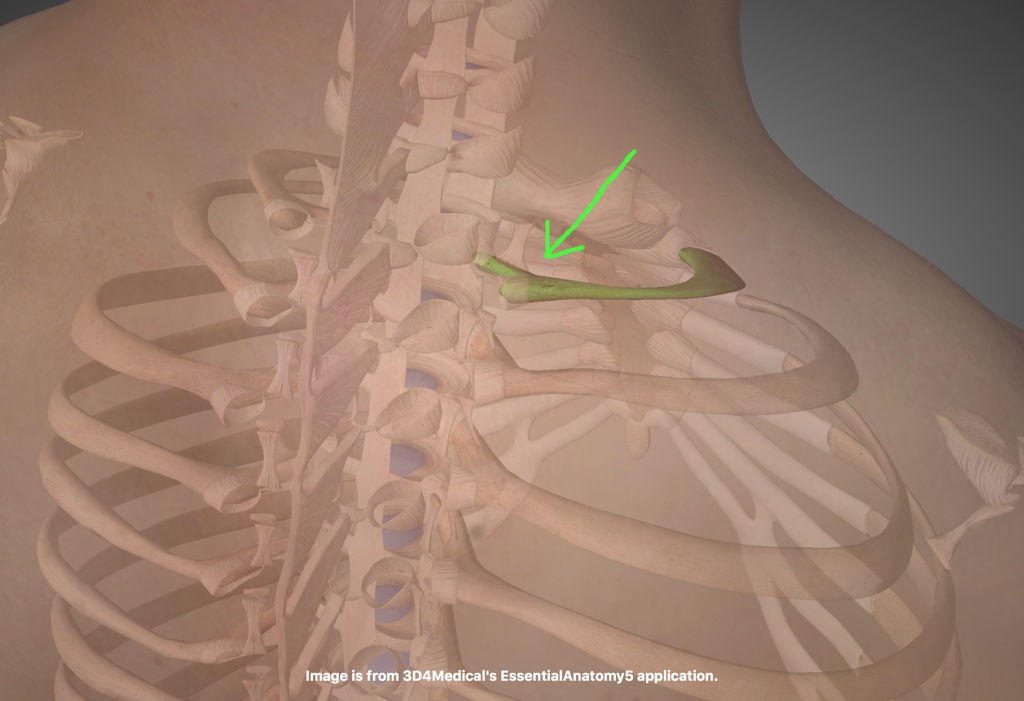
Ever treat a stubborn first rib? I know I have over the years. Seeing a patient that has an elevated first rib and thinking that I have to mobilize or manipulate it (mainly in the caudal direction) would get results… sometimes. Now, admittedly there are a number of things that could cause someone’s first rib to be elevated. However, in this video, I show you a quick, efficient, and effective way to determine if the patient in front of you with an elevated first rib has a true superior subluxation… or, a much more common dysfunction that often tricks clinicians into thinking the first rib is the main issue. Check it out below, and let me know your thoughts!
Cheers!
Matt
Mike Baum PT, CFMT
I can do a PNF LE pattern and see if I’m getting translation up into the cervical area. I can resist their lower extremities in a hooklying position and see if I get short cervical neck flexion kicking in. If I don’t, I know that some place along the kinetic chain, there is a dysfunction. I can do pelvic or scapular patterns, and see where I’m not getting efficiency of movement, or efficiency of a spreading motor response. Which is very nice. Then, I go back in and check my PIVMs, do my stress tests and see what’s going on. Now, the beauty of PNF is, that there’s quite a few people who may not do well with manipulation. These are the people who have already been to other therapists, chiropractors, osteopaths. They’ve already been manipulated and they say ‘great, it feels good for two to three days and then it comes back again. Is there anything you can do to help?’ And the answer is yes, there is, because if you can get even a little bit of a response then I know I can help you.
– Mike Baum
Sit down, listen up, and hold on for this interview. Getting to hear Mike Baum is always a joy. When you consider what makes someone a master… at anything… you usually want to pay attention to what they are doing. Mike is one of those such people, as I would consider him a master at proprioceptive neuromuscular facilitation (PNF). In my conversation with Mike, he demonstrates consistently how well he is able to integrate this treatment approach in his practice… with any patient who walks in the door. It doesn’t matter if they are a patient that has had a stroke or traumatic brain injury (TBI); a patient with chronic lower back pain or recent shoulder surgery; or a high performance athlete trying to return to the field or enhance their performance somehow. Mike is certainly a jack of all trades, but unlike the old saying… he is definitely NOT a master of none! Listen in below in our various formats and let me know what you think 🙂
How hard do you have to push on a pillow to know it’s soft? How hard do you have to push on a brick to know it’s hard?
– Mike Baum
Listen in here:
Or tune in down here:
Links of interest mentioned during this conversation:
Oregon Neurosport Physical Therapy Facebook Page
Email address – mike@oregoneurosportpt.com
Choose your words wisely!

I recently put out a message on our Facebook and Twitter pages asking what things followers of this blog would like to see or hear more of? One of the responses was about subjective questions or objective tests that I preferred. That got me thinking about some of the things we tend to say to our patients, with or without realizing it. So, I’ll list out some of the things I try to keep in mind when speaking with patients.
During the initial evaluation and the subjective/history/interview (whatever you want to call it), I try to say something like “How can we help you?” This question lets the patient know you are there to help them and it gives them some freedom to tell their story and want they want help with the most. Obviously, you as the clinican are still in charge of this process and have to direct them where necessary, but I like this as a good starting off point. Think of it as an easy ice-breaker into the conversation you’re about to have. After you have gained the information you need and the patient is satisfied with what they want to tell you, I usually say something like “Is there anything else we haven’t mentioned that you think we need to discuss or talk about regarding why you’re here?” That way, it again gives them a chance to bring up anything they feel is important to them. It also helps myself in the case that I forgot to bring up something important to their case. Lastly, it shows the patient that you are genuinely interested in learning as much as you can about them and what the two of you can do together to help them the most.
During objective testing, there is one big point I want to make that has been impressed upon me during training with one of my mentors. That is, when you are doing objective tests and want to know how a particular movement, over-pressure, stress test, manual muscle test, etc. affected their pain… DO NOT ask them “does/did that hurt?” For most of our patients coming in with chronic pain, of course it hurts! Almost everything hurts! The most important thing to ask instead is “does/did that change your pain (or symptoms)?” You really have to keep some patients on task with this question because they may want to qualify their answer and go off on some tangent. Be a stickler here and make sure they commit to either a “yes” or “no” response. Next, ask them HOW their pain/symptoms are different. Is it better or worse… if so, in what way? That way, you can genuinely gain a better understanding for how their pain/symptoms respond to different objective measures/tests. I know it seems ridiculous that I’m mentioning such a thing, but this is really key, and a mistake that I see lots of students and inexperienced therapists make on a routine basis.
At the end of this initial encounter, I try to mention to the patient something positive based on what we’ve seen so far and say so. Usually it is something like “I really think we can help you” or “we can help you get back to _________ much better than what you’re doing now” or “if you can put in the work, we can help you get better”. Statements like these are meant to again give the patient hope that they can get better, that you DO care about them getting better, and that you have confidence in your own abilities to get the job done. I don’t overstate the facts though. I don’t give someone false hope if their prognosis is not such as mentioned above. However, for the overwhelming majority of our patients, we CAN help them and get them better… no matter what our skill levels are. If nothing else, placebo can be a powerful thing for patients sometimes!
Those are some of my suggestions. This is one area that we could ALL get better at, so I would certainly like to hear your thoughts. Please share with all of us and comment on this blog post below!
Cheers,
Matt
Interview with Ray Klepper PT, DPT – part deux
**Update – this is the second portion of the interview with Ray. Again, had to split up the posts to make sure it would load properly onto iTunes and Sticher. Thanks for your understanding!**
Today’s interview is a change of pace from our usual foremat that many of you have come to enjoy. It is specific to one topic that isn’t really about manual therapy. However, it is a topic that is being discussed more and more among the health field… and that is, nutrition and the role it plays in our health.
Ray Klepper PT, DPT is a co-worker, colleague, and friend of mine who has delved pretty far down this rabbit hole as it relates to the typical recommended diet by those in authority over the past fifty years… and how (not so new) alternatives are proven to be much safer and healthier. However, recent research is showing more and more that previously recommended diets are not solving our health problems as a country, but more likely contributing to them.
During this interview, Ray and I discuss some of the physiology behind blood metrics like cholesterols, triglycerides, blood glucose and insulin; as well as chronic diseases such as diabetes, metabolic disorders, etc. that can all be changed (for the better) through an appropriate diet/lifestyle. Our conversation centers mainly around the low carbohydrate-high fat realm. For those of you somewhat familiar with this topic, you may have heard of “keto” or “ketogenic diet”. This is just a more strict form of low carb-high fat.
If you are at all interested in health/wellness and newer research that has been coming out recently (i.e. fat isn’t bad, cholesterol is not the devil we though it was, saturated fats are not harmful, etc.), then you won’t want to miss this interview. Or, if you disagree with us, please voice your opinions on the comment section of this blog because I would thoroughly enjoy learning your opinions!
If you enjoy this interview, other interviews, or any of the content on this blog… please share with friends or colleagues on any of our social media or ask them to sign up for updates on new content by putting their email address in at the “sign up” area at the bottom of the website. Oh, and this is split up into two files because of an editing snafu (my apologies). Happy listening!
Cheers,
Matt
 Manual Therapy Forum